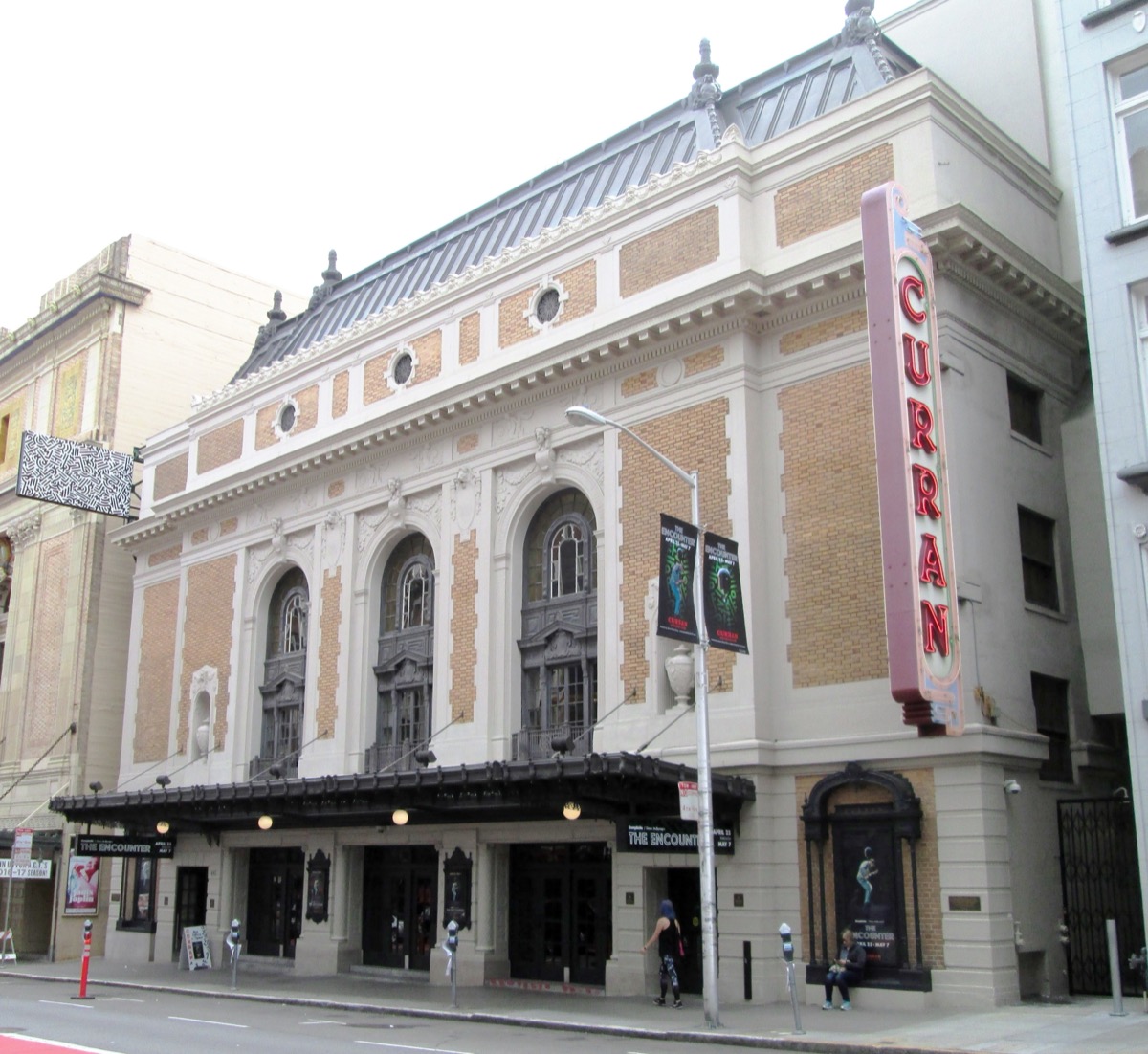
At the Curran Theatre in San Francisco, staff and patrons keep seeing a young man in 1930s clothes reflected in the lobby mirror. They say he's Hewlett Tarr, the 25-year-old ticket-seller shot dead at the box office in 1933, weeks before his wedding.
At the Curran Theatre in San Francisco, people keep seeing a young man in the lobby mirror. He's dressed in 1930s clothes, and he shows up where the mirror near the old box office hangs — a second face in the glass, behind the one looking in. Staff and patrons have described him the same way for decades, and most of them have a name in mind.
The Curran opened in 1922 at 445 Geary Street, named for the producer Homer Curran, with a hand-painted ceiling in the lobby and 1,667 seats. On the evening of November 28, 1933 — two days before Thanksgiving — a young man in a brown suede jacket walked up to the box-office window. Behind it sat Hewlett G. Tarr, 25, the theatre's treasurer, who had worked there seven years and was weeks away from his wedding. The man pushed a revolver through the ticket window and fired one shot into Tarr's chest. Tarr died minutes later, just before that night's performance of *Show Boat*.
The killer was Eddie Anderson, a 25-year-old former electrician the papers called the Hatless Slayer. He got away that night. Three weeks later, on December 18, police caught him fleeing a Bank of America robbery, and a shootout followed. He claimed the gun at the Curran had gone off by accident — his account, not a fact anyone established. The jury took about seven hours. Anderson was hanged at San Quentin on February 15, 1935, at 10:04 in the morning.
Tarr never left the box office.
The theatre closed in 2015 for a long restoration and reopened in 2017 with the musical *Fun Home*. New paint, new wiring, new everything. The young man kept turning up in the mirror anyway — still standing near the window where he was working the night someone shot him through it, weeks before the wedding he'd saved for.