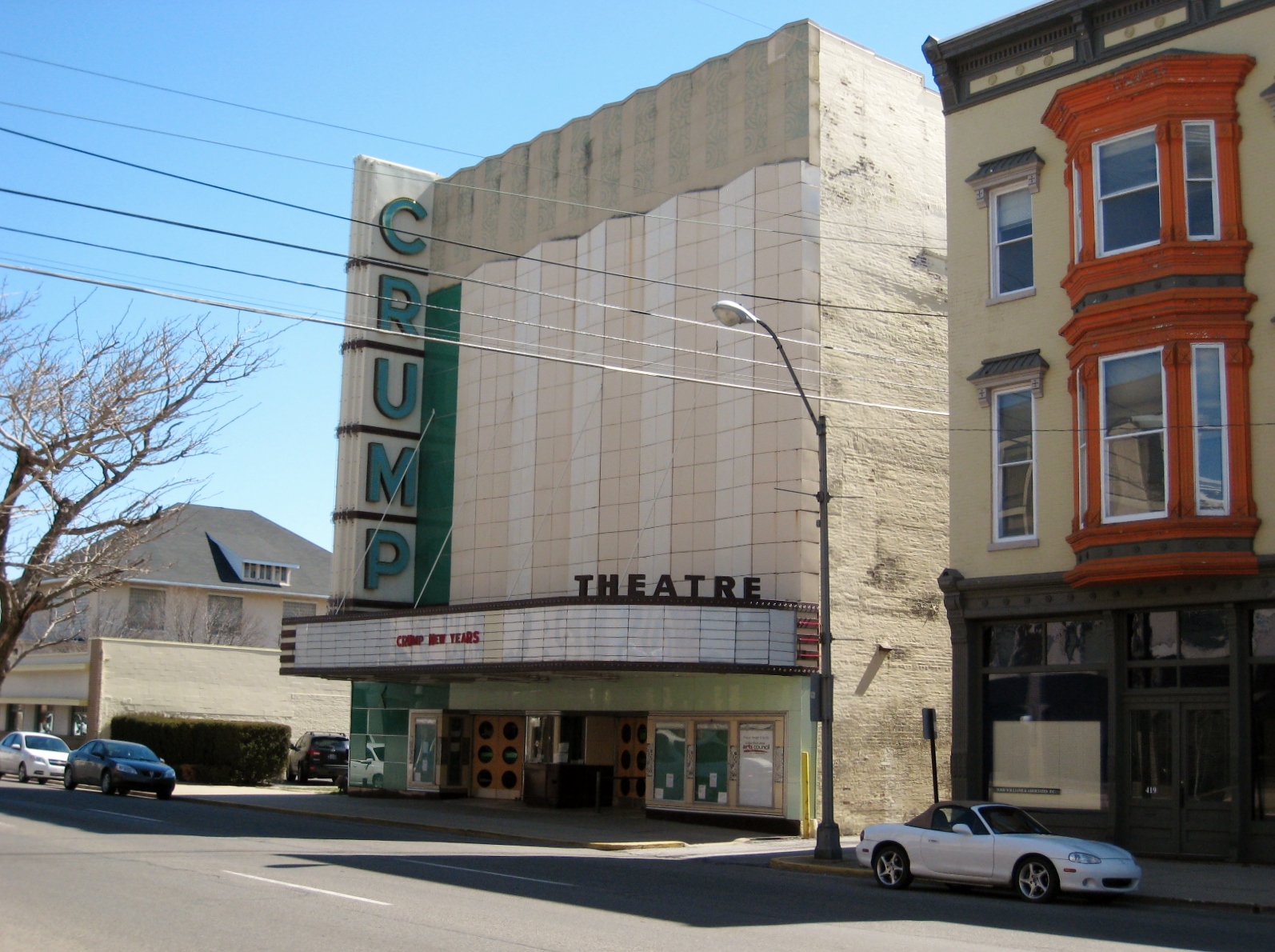
At the Crump Theatre in Columbus, Indiana, a woman in deep Victorian black appears on the eastern staircase, so solid that workers take her for a living visitor. One investigator says she's the daughter of the man who built the place, dead 700 miles away under a name that wasn't hers.
At the Crump Theatre in Columbus, Indiana, the figure people keep meeting on the eastern staircase is a woman in deep Victorian black. She is so solid, so lifelike, that workers mistake her for a living guest and only later realize no living guest was dressed like that. The staff report children too, and men, and music drifting down from the top of the stairs, and a recording of a woman's voice saying "thank you." But it's the Lady in Black who has a name attached to her.
A paranormal investigator named Evel Ogilville thinks he knows who she is, and the case runs back to the man who built the front half of this building. Columbus attorney Colonel John A. Keith put up Keith's Arcade at 425 Third Street in 1871, then lost it to financial ruin; John S. Crump bought the shell at auction for $6,000 and opened a theater in it in 1889. Keith had one child, a daughter named May Dema.
In 1880 May married a man her father didn't approve of and left Columbus, eventually landing in London, where she performed in a mandolin-and-guitar ensemble as "Senorita Dema Terval." Then, in May 1896, a woman checked into the Colonnade Hotel in New York under the name "Mrs. Everett of Boston." Days later she was dead of a gunshot wound to the head. The tabloids called it the Zerega Mystery, and for a while the papers guessed she was a Frenchwoman named Louise Lansburg, nobody at first connecting the dead stranger in the Manhattan hotel room to the colonel's daughter from Indiana.
Ogilville argues the woman on the staircase is May Dema Keith, come home to her father's theater, and points to the resemblance between what workers describe and the 1896 newspaper sketches of "Mrs. Everett." The historical death is on the record. The identification is one man's idea, no documented tradition behind it, and the two belong in separate columns.
The theater itself sat shuttered for nearly nine years after a 2014 closure, the roof rotted open to the weather, the ceilings collapsing inside. Volunteers cleaned it out, replaced the roof, and reopened it for events in 2023. They relocated a colony of roughly 100,000 bees from above the stage and uncovered a 1941 mural that glows in the dark. The building came back. So, by every account, did the woman who never officially lived there.