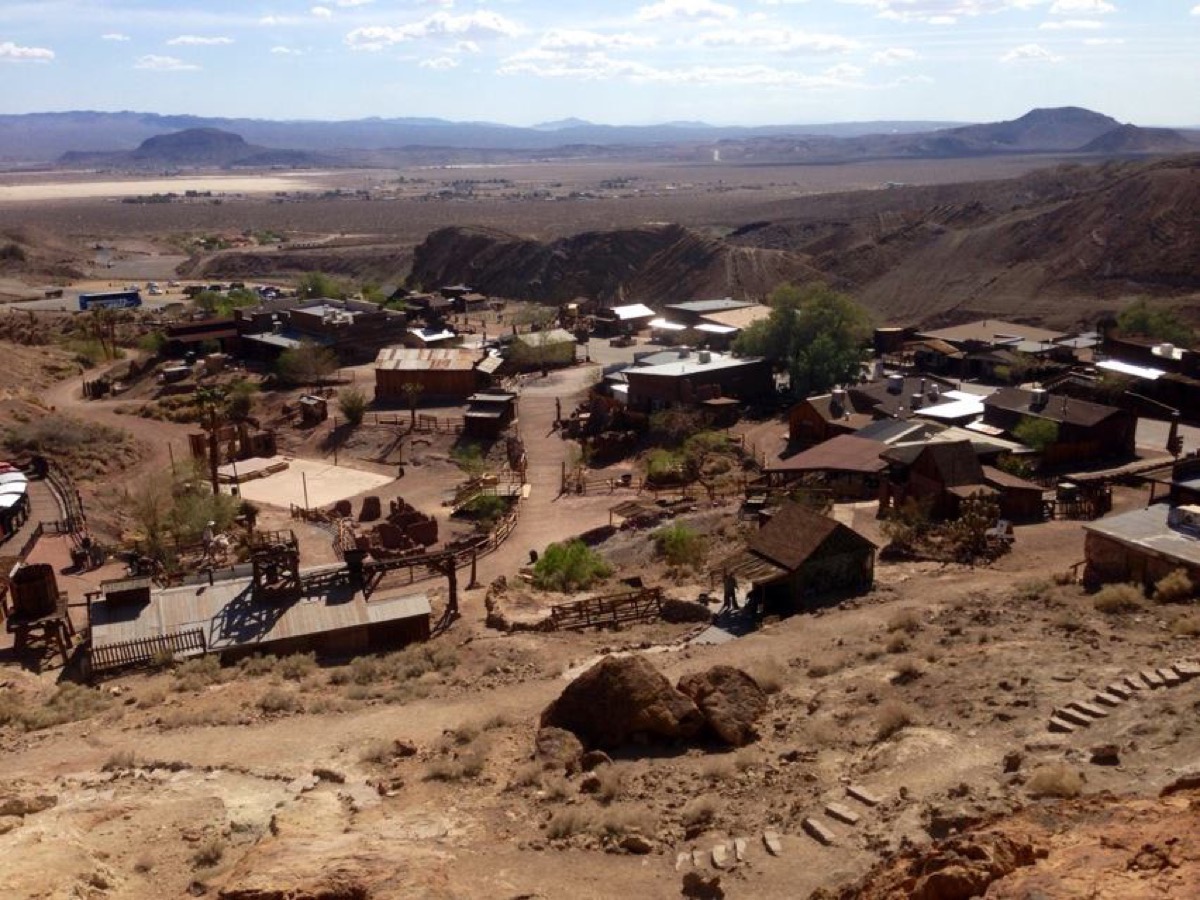
At Calico Ghost Town in the California desert, visitors keep describing the same woman: Lucy Lane, in the black lace dress she was buried in, walking between her old house and the store she once ran. She lived here 67 years and, the lore says, never left.
At Calico Ghost Town in San Bernardino County, California, the most-reported ghost is a specific woman in a specific dress. Visitors describe Lucy Lane in the black lace dress she was buried in, walking the short stretch of boardwalk between her old house and the general store she and her husband once ran. Always the same outfit. Always the same walk.
Lucy was a real person, and almost no one in Calico's history belongs to the place the way she does. Lucy Bell King Lane lived from 1875 to 1967. She married John Robert Lane at 18, and together they ran a store in this silver-mining town. When the silver market slumped, the Lanes left in 1899, like nearly everyone else. But in 1916 they came back for good — to a town the rest of the country had already given up on. She stayed until she died at 93. They called her the Queen of Calico.
So when people say she never left, they mean it twice over.
Calico was founded in 1881, boomed on silver, and emptied out when the prices collapsed in the 1890s. Walter Knott — of Knott's Berry Farm — bought the dead town in 1951 and rebuilt it from old photographs. Most of what you walk through now is his reconstruction. Only five buildings are truly original, and one of them is Lucy's home, which started life as the town's courthouse and post office and is now the Lucy Lane Museum.
She's reported most often inside that building. Sitting in a rocking chair in the museum that used to be her house. Standing behind the counter of the general store, where the lore says she still works.
Other figures get named here too — a white-bearded marshal on Main Street, a girl in the schoolhouse who shows herself mostly to children — but none are described with the consistency people give Lucy. The dress, the walk, the chair, the counter. The same woman, doing the same quiet things, in the only town she ever really wanted.