On the road between Bellefontaine and Calvary cemeteries in St. Louis, a pale young woman in a white dress flags down drivers at sunset, makes conversation, then disappears from the moving car before it clears the gates. Returning soldiers named her Hitchhike Annie.
The young woman waits on Calvary Drive, the road that runs between two cemeteries in St. Louis, and she comes out only around the time the sun goes down. She is pale, dark-haired, in a white dress. She flags a passing car, asks for a ride up the street, talks easily with whoever stops. Then, before the car clears the cemetery gates, the seat beside the driver is empty. Soldiers coming home from World War II are the ones who gave her a name. They called her Hitchhike Annie, and people have been picking her up since the 1940s.
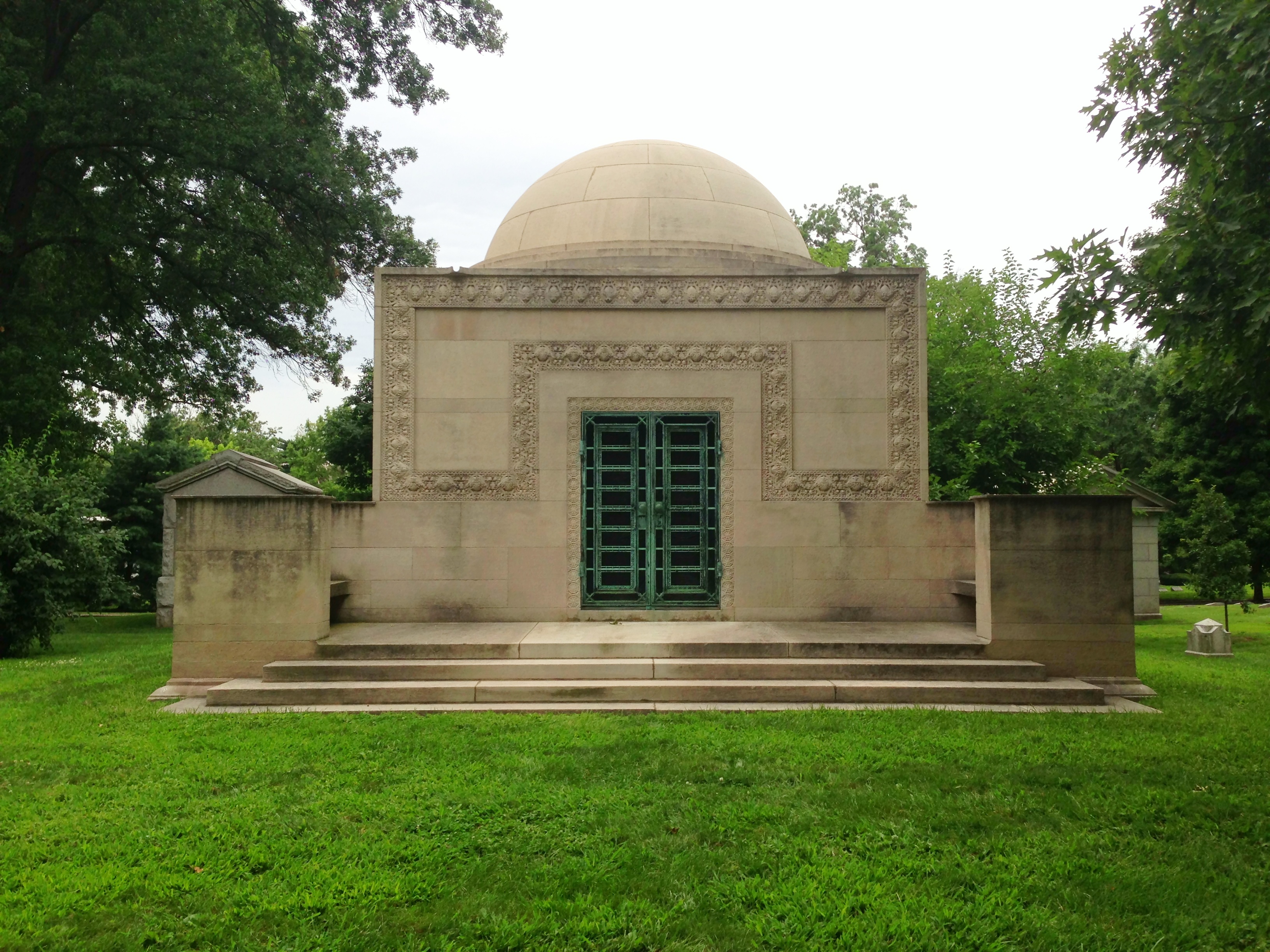
She belongs to the road as much as to either graveyard — Bellefontaine on one side, Calvary on the other, both of them reputed to be restless. Bellefontaine is the older of the two, founded in 1849, the first rural cemetery west of the Mississippi. It opened the same summer cholera swept the city and killed roughly 4,317 people, almost 7% of St. Louis. More than 87,000 graves fill its grounds now, William Clark of the Lewis and Clark expedition among them.
Annie isn't the only one drivers report. Some say they've stood on the brakes for a little boy who steps into the road in clothes from the 1800s and is gone before the car stops. The lore offers him a name, with nothing solid behind it: Edmond Heath, who died in 1867. The story goes that his family meant to move him to Kansas City years later, dug up a girl's body by mistake, and left the boy behind. Locals also tell of a woman in full Victorian mourning, black dress and veil and gloves, who walks the older sections and slips behind a monument, never coming out the far side.
The account that sticks comes from the bus stop outside the gates. Several city drivers reported the same woman in a red dress, searching the same spot the same frantic way. As one telling has it, "the drivers couldn't remember how they knew she was looking for her baby, but it was somehow common knowledge."
Bellefontaine is still an active cemetery, with funerals several times a week, and it permits no ghost tours of any kind. What it does host, now and then, is a theatrical trolley tour. Costumed actors stand among the graves and speak as the people buried beneath them, putting voices to the dead on purpose, on a strip of ground where, the stories say, some of them never needed the help.