A family at Thespian Hall in Boonville, Missouri photographed an opera and found a woman they didn't remember seeing: grey hair, white blouse, a pocketbook in her lap, her face a blur. They knew her. It was their grandmother, and she'd been dead a while.
A family went to the opera at Thespian Hall in Boonville, Missouri, and only afterward, scrolling back through their pictures, found the woman they hadn't noticed at the time. She sat in the audience: grey hair, a white collared blouse, a dark skirt, a pocketbook resting in her lap, her face blurred where everyone else's came out sharp. They recognized her anyway. It was the grandmother they'd recently buried, and she had loved the opera.
The staff call her Mrs. X. Since the photograph she's turned regular, the story goes, slipping into the seats during rehearsals in that same outfit, watching the empty stage, gone the moment anyone looks straight at her. She never goes up to perform. She came to be in the audience. The photo and the sightings come from ghost-travel sources, not a newspaper or the historical record, so the picture is most of what the story has.
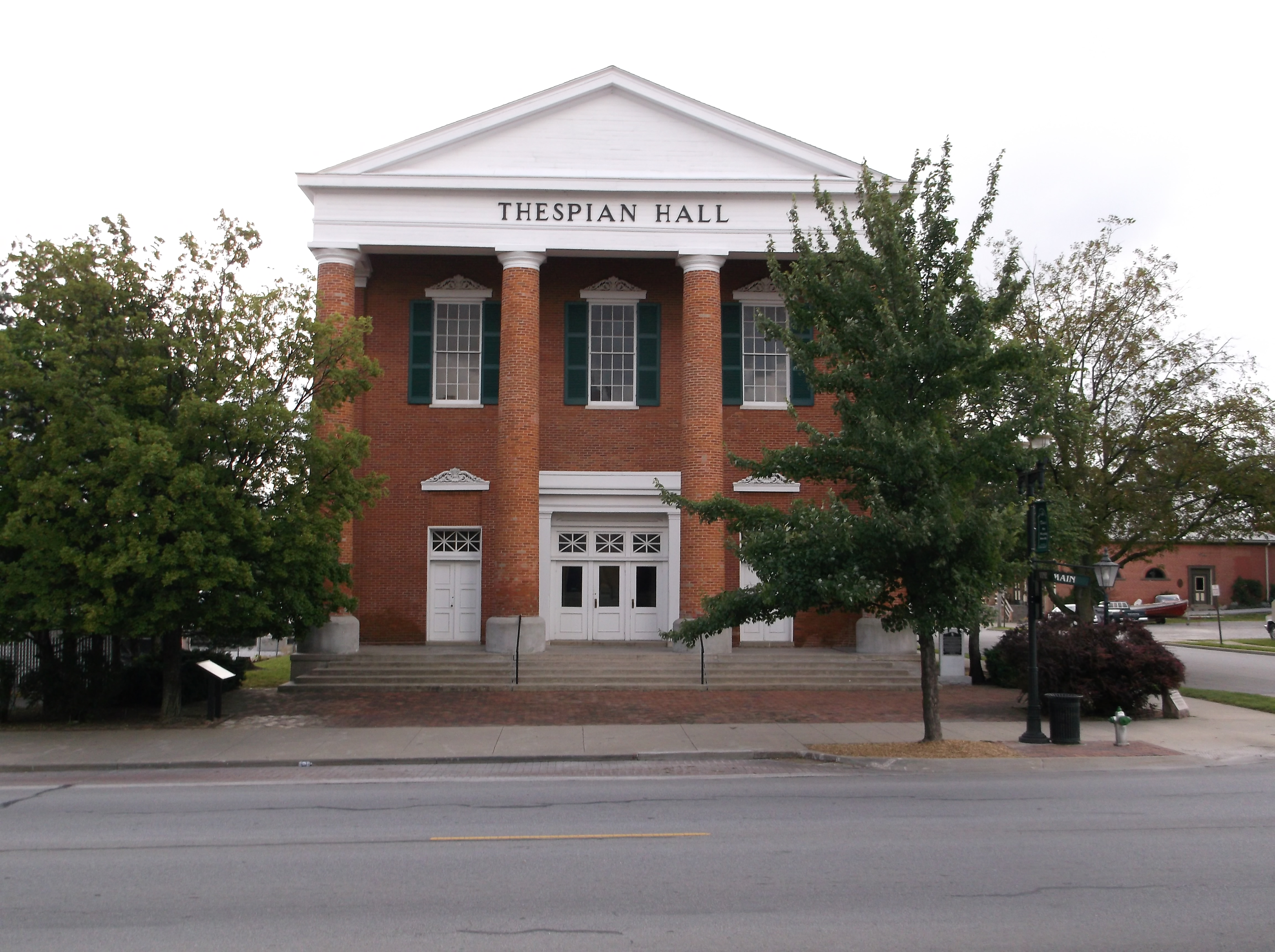
The hall earns the company. It's the longest continually operated theater west of the Allegheny Mountains, a Greek Revival brick building fronted by four Doric columns made of wedge-shaped brick, built between 1855 and 1857 by a dramatic society that sixty leading citizens had founded back in 1838. It opened on July 3, 1857 with a grand ball and got its dedication the next day, the Fourth. Then the Civil War took it. Federal troops quartered there and ran it as a hospital, and the city's own record adds the word morgue. It went on to be an opera house, then a movie theater from 1912 to 1976, before the Friends of Historic Boonville bought it and restored the stage.
Mrs. X isn't the only thing reported inside. The wig stands in the dressing room are said to turn on their own, swiveling to face the mirrors in an empty room. Ragtime drifts through the hall with no source anyone can place, no player at any keyboard. In November 2020 a paranormal team spent an evening watching the top balcony. "Many people reported still seeing some sort of movement up there," the lead investigator wrote afterward. One of her team said something touched her in the dark.
But the wig stands and the music are the building doing what hauntings do. The grandmother is something else. A woman dressed for a night out, blurred in a photo nobody meant to take of her, sitting where she must have always sat. She had a seat at that theater long before she died. She just never gave it up.