Old Green Eyes is the most persistent ghost on the Chickamauga battlefield, two green eyes floating at head height where 34,624 men fell in 1863. One version makes him a headless soldier, another a creature the battle woke. Even the park's historians can't agree.
Two green eyes hover at head height over the Chickamauga battlefield, and there is nothing around them. No face. No body. Just the eyes, drifting the dark between the monuments. Locals call him Old Green Eyes, and he is the most persistent ghost on a field where 34,624 men were killed, wounded, or captured in three days.
Nobody agrees on what he is. In one telling he was a soldier decapitated by a cannonball on the second day of the battle in 1863; his body went in the ground, his head was never found, and the eyes hover at the height of a man's face because they are looking for the rest of him. In an older telling he was never a soldier at all — a thing taller than any man, covered in hair, with long fangs pushing from a crooked jaw, that the slaughter simply woke and fed.
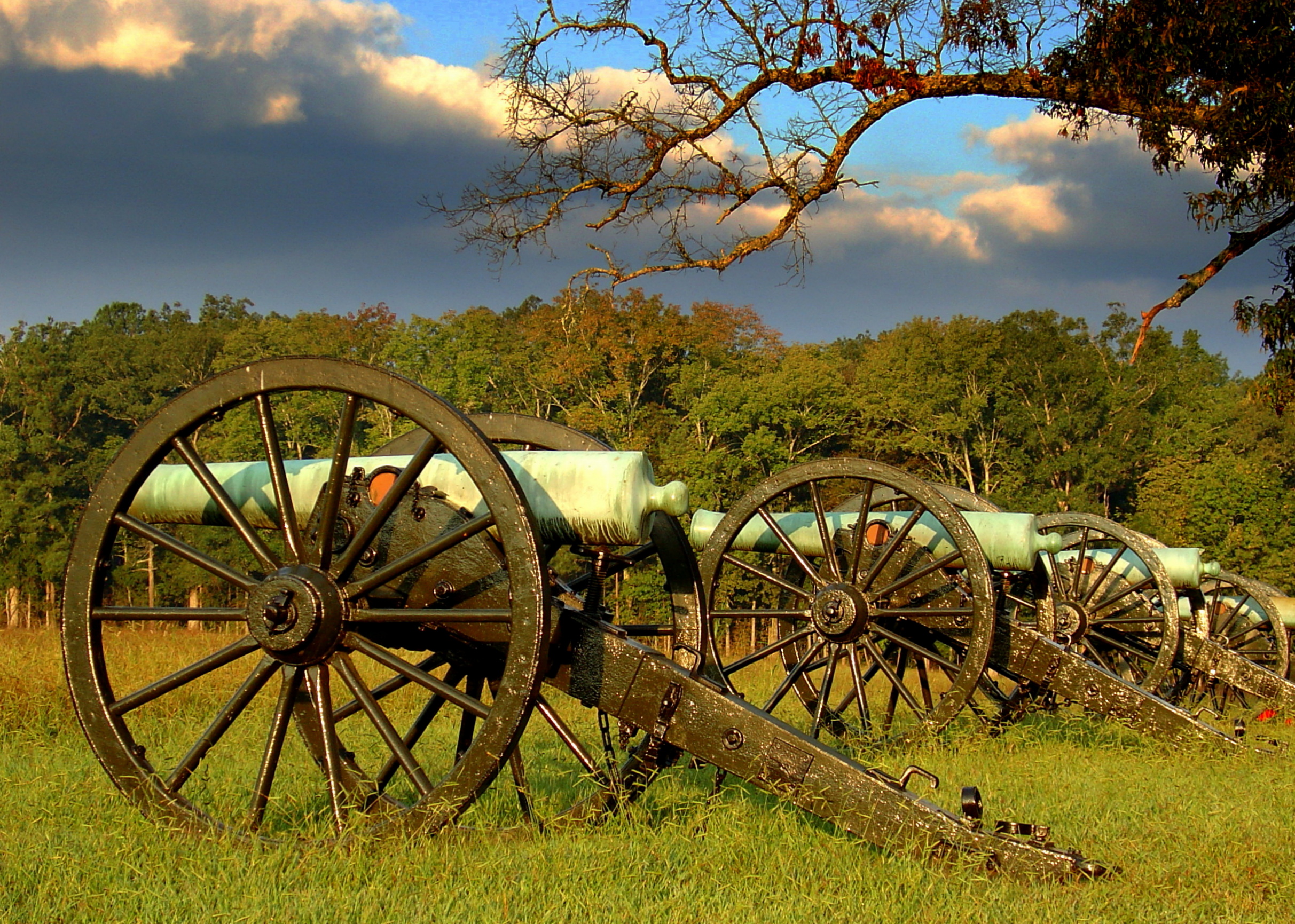
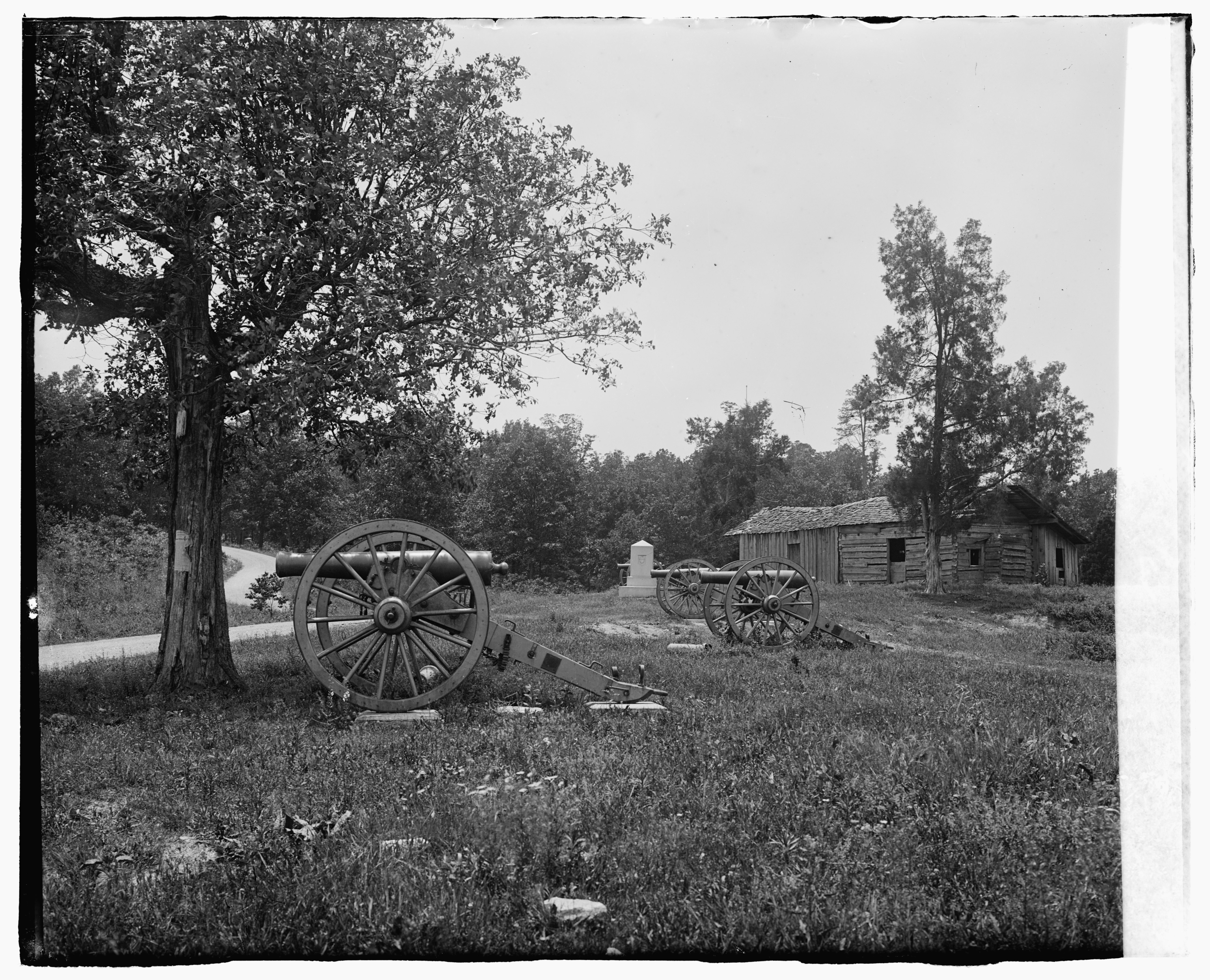
The slaughter was real. The Battle of Chickamauga ran September 18 to 20, 1863, and it was the second-bloodiest of the entire Civil War, behind only Gettysburg. The Confederates won the field and then wasted the win, letting the beaten Union army fall back into Chattanooga rather than finishing it. The armies had forced their way across West Chickamauga Creek at named crossings, Reed's Bridge and Alexander's Bridge among them, and made their last stand up on Snodgrass Hill. The park covering that ground straddles the Georgia-Tennessee line and was the first and largest of its kind in the country.
The eyes keep to no single crossing. The best-documented sighting belongs to Edward Tinney, who ran the park as historian and chief ranger for 31 years. Around four in the morning in 1976, during a reenactment, he was walking Glen Kelly Road when a figure crossed in front of him — well over six feet, in a long black riding cloak, black hair down to its waist. It turned toward him. The face, he said, had "a devilish grin, and his dark eyes glistened." Then a car came around the bend, its headlights swept the road, and the figure was gone.
What keeps the story alive is that the park's own historians cannot agree it ever began. Jim Ogden, who followed Tinney as chief historian, traced the legend to a park employee who started in the late 1960s and claimed he made the whole thing up — and found that people who grew up nearby in the 1950s had never heard of it. An author named Mark Fults argues the opposite, that Green Eyes is older than the battle, older even than the Cherokee. One historian saw him on a dark road. The other says a bored ranger invented him. Both men worked the same field.