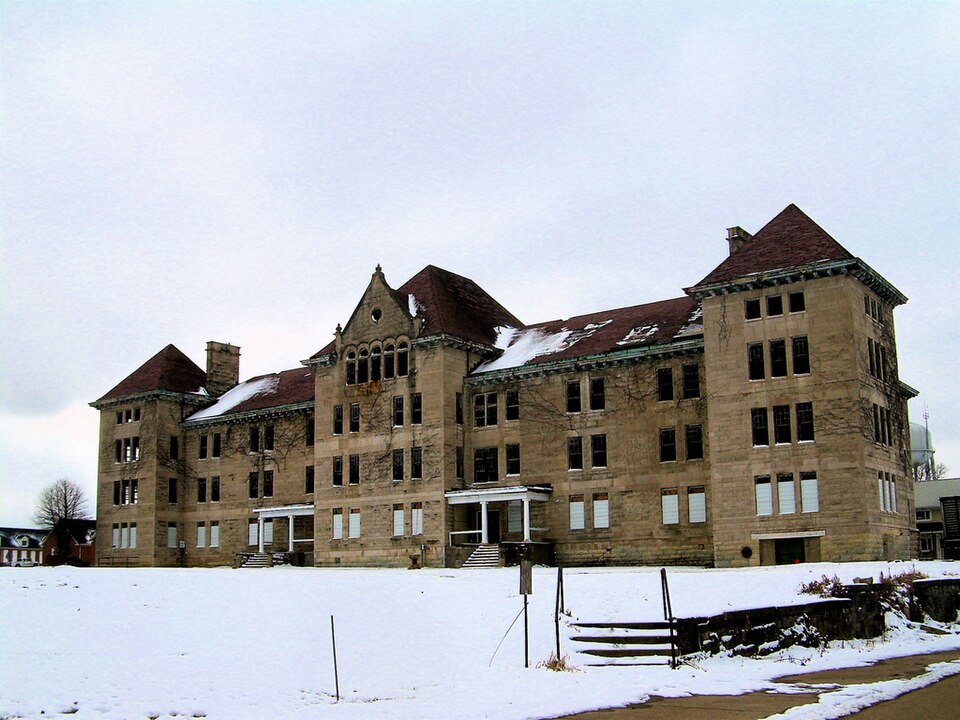
At Peoria State Hospital in Bartonville, Illinois, a mute patient nicknamed Old Book wept at every burial he dug. The superintendent wrote that when Old Book himself was buried in 1910, the coffin went weightless — and there he stood, sobbing against his tree.
At Peoria State Hospital in Bartonville, Illinois, there was a mute patient on the burial crew the staff called Old Book, and at every grave he helped dig, he wept against the same elm in the potter's field.
He couldn't speak, and no one knew his real name — "Bookbinder" came from a printing trade he'd worked before he was committed. He'd step away from the crew, lean against that one particular tree, and cry for the patient going into the ground. He did it for years. The staff got used to it.
He died of tuberculosis in 1910 and was buried under marker 713 in the hospital cemetery. The superintendent, Dr. George Zeller, ran the service himself, and what he later wrote in his memoir is the whole legend. As the coffin was lowered, he said, it suddenly felt empty. The men carrying it stumbled. Weeping came from the direction of the elm — and there, leaning against the tree he always cried at, stood Old Book. By Zeller's own count, 100 nurses and 300 spectators saw it. They stopped the burial and pried the lid off. The body was inside.
Zeller's memoir is the only place this account exists. Nothing else corroborates it, and the museum's curator believes Zeller shaped the story to honor a forgotten patient's dignity. So the 400 witnesses are his witnesses, and the apparition is his telling.
The tree, though, did something everyone could watch. Over the next year the elm withered and died. When crews tried to take it down, they reported a wailing from inside the trunk, and one man who swung an axe at it said the wood let out a scream, as if he'd struck a person.
The hospital closed in 1973. Most of its 63 buildings are gone. Old Book is still out there under 713, in a field of graves marked only with numbers.