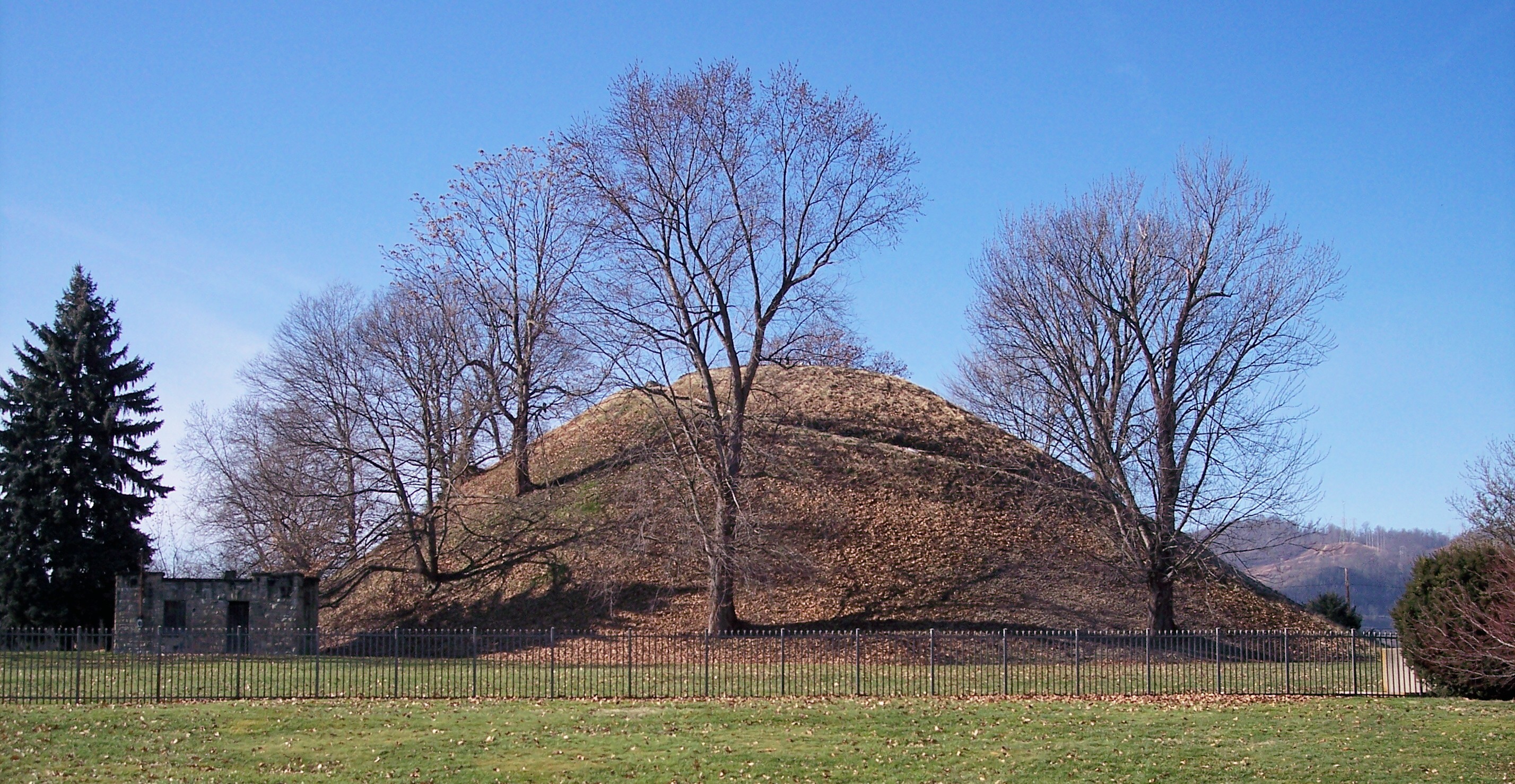
Grave Creek Mound in Moundsville, West Virginia is 62 feet of packed earth the Adena raised for three people. In 1838 two men tunneled in, opened both tombs, and charged 25 cents to walk through the burial chamber. The reports started after that.
Grave Creek Mound stands in the middle of Moundsville, West Virginia, 62 feet of packed earth behind an iron fence, and the stories about it come after dark. Soft lights drifting near the slope. Footsteps in the museum's empty hallways, doors swinging open, a heavy watchfulness in the rooms that hold the burial goods. A former tour guide said he watched a figure at the edge of the mound at dusk, a Native man who was gone a second later, the birdsong cutting out all at once. None of those witnesses is named, and one paranormal travel site is the only place the accounts appear.
What the lore blames is easy enough to date. 1838.
The Adena built the mound in stages starting around 250 B.C., moving roughly 57,000 tons of sand and earth by hand, an estimated three million basket-loads. It is the largest conical burial mound in North America. A ditch 40 feet wide and 5 feet deep once ringed it, crossed by a single causeway. When Meriwether Lewis stopped here in 1803, a white oak was growing out of the summit that he put at about 300 years old.
All of that was raised for three people.
On March 19, 1838, Abelard Tomlinson and Thomas Biggs drove two horizontal tunnels and a vertical shaft about 111 feet into it. The fullest chronology of the dig, kept by the travel-history blog Great American Hikes, has the two working under a 30-year lease. The lower vault held a man and a woman laid out with some 650 shell beads. The upper vault, reached that June, held one man with 1,700 more, sheets of mica, five copper arm bands, and what that account calls a diamond-shaped gorget of limestone.
Then they widened the lower burial chamber and opened a museum inside it. 25 cents for an adult, half that for a child.
The rest followed. The same chronology dates a saloon on the summit to 1858 and Union cannons up there to 1863. Horse races were run around the base, and the grounds turned into a county fair site.
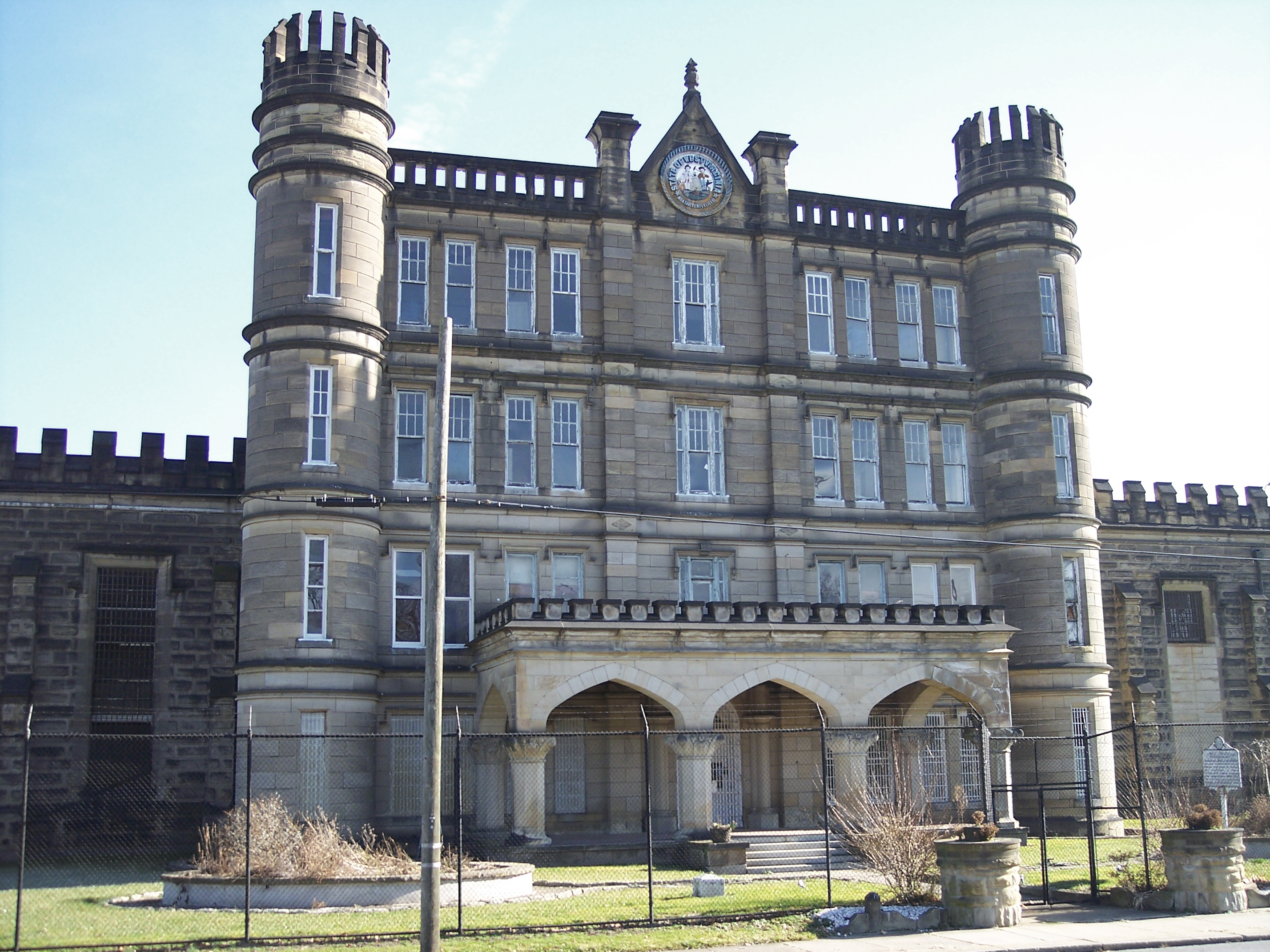
Directly across the street, 0.07 miles away, sits the West Virginia Penitentiary. The standard explanation offered for that prison's activity is the mound. Some believe, as Legends of America puts it, "that negative energy from the deceased Native Americans infiltrated the prison." A ghost tour company sells the town on the pairing: the biggest burial mound in North America on one side of Jefferson Avenue, what it calls the most haunted prison in the country on the other.
West Virginia bought the mound in 1909; the Great American Hikes chronology credits teachers and students with raising $1,400 toward the price. Today it is a state park with a free museum, where curators are rehousing 2,000 boxes of legacy collections in a lab on the grounds.
Where the remains of the three went, no record says.