At the LeDuc Historic Estate in Hastings, Minnesota, staff say the general who built the house never left his study. In life, William LeDuc held séances to talk to the dead and wrote a book about it. The story has him on the other side of it now.
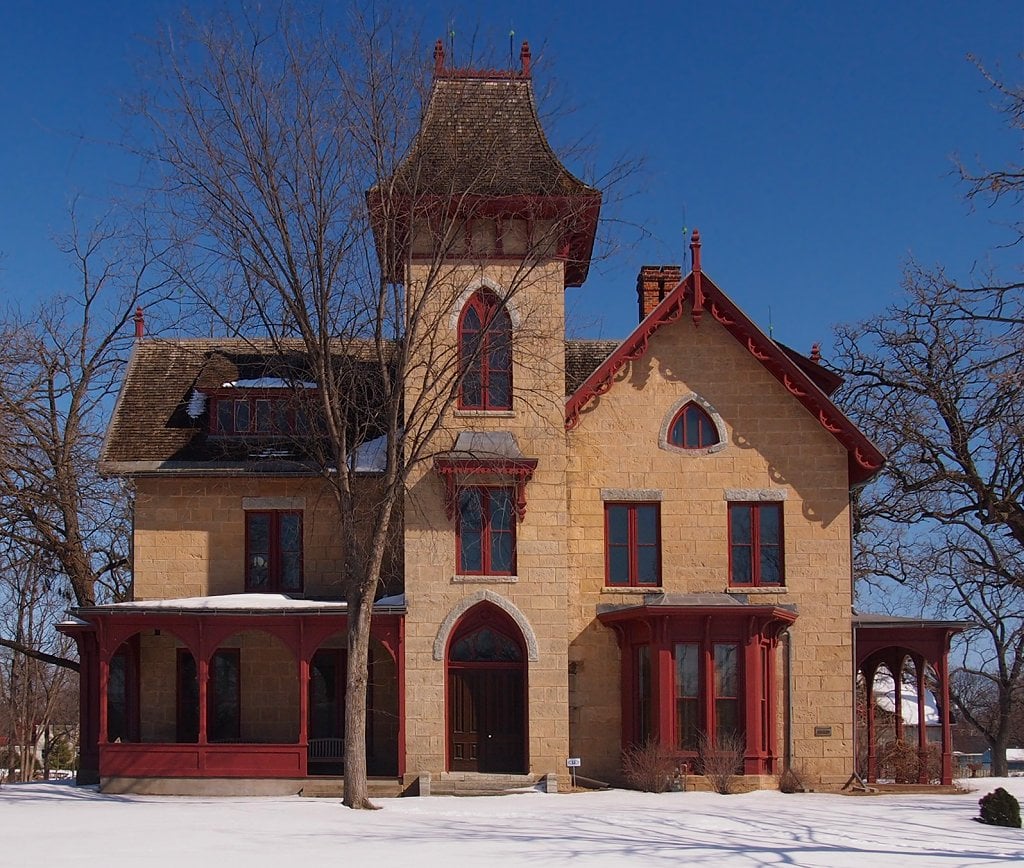
At the LeDuc Historic Estate in Hastings, Minnesota, the man people say still walks the study tried, while he was alive, to reach the dead. His name was William Gates LeDuc, and the Gothic Revival mansion at 1629 Vermillion Street is the one he built.
He came to Minnesota Territory from Ohio in 1850, served as a Civil War quartermaster, and was made a brigadier general in 1865. The house went up between 1862 and 1866, drawn from a pattern book by Andrew Jackson Downing, its limestone walls close to three feet thick. The family moved in during 1865. LeDuc kept it the rest of his long life. He died in 1917, at 94.
The turn came in 1904, when his wife Mary died. After her death LeDuc took up spiritualism, the era's fashion for contacting the dead, and in 1906 he published a book recounting talks he said he'd held with long-gone Civil War generals during séances. The man who built the house spent his last years trying to call the dead back across the line he would soon cross himself.
Now the story has it the other way around. Staff and visitors say it's the general himself who lingers, with phantom footsteps in his study and papers that rustle at the workspace where he wrote. Doors open and shut on their own, sometimes slam. Objects move between rooms. People report cold spots, and a few say they've seen him.
He isn't said to be alone. The lore names his daughter Alice, who never married and is said to have stayed to watch over her father, and Carroll Simmons, the antique dealer who bought the home in 1940 and later gave it to the Minnesota Historical Society. Staff describe all three as friendly, unseen hosts. Accounts also describe lights in the attic tower windows after closing, though that one rests on a single telling.
The estate is a house museum now, owned by the city since 2005 and run by the Dakota County Historical Society, open for guided tours through the warmer months. The society has even hosted a candlelit "Harvest Haunting," where a volunteer walks guests through 1850s spiritualism, recounts the séances LeDuc held after Mary's death, and stages a mock one, with readings from Poe and from LeDuc's own book.
So the house that opens its doors to retell his séances is the same house where, the story goes, the man who held them answers from the other side.