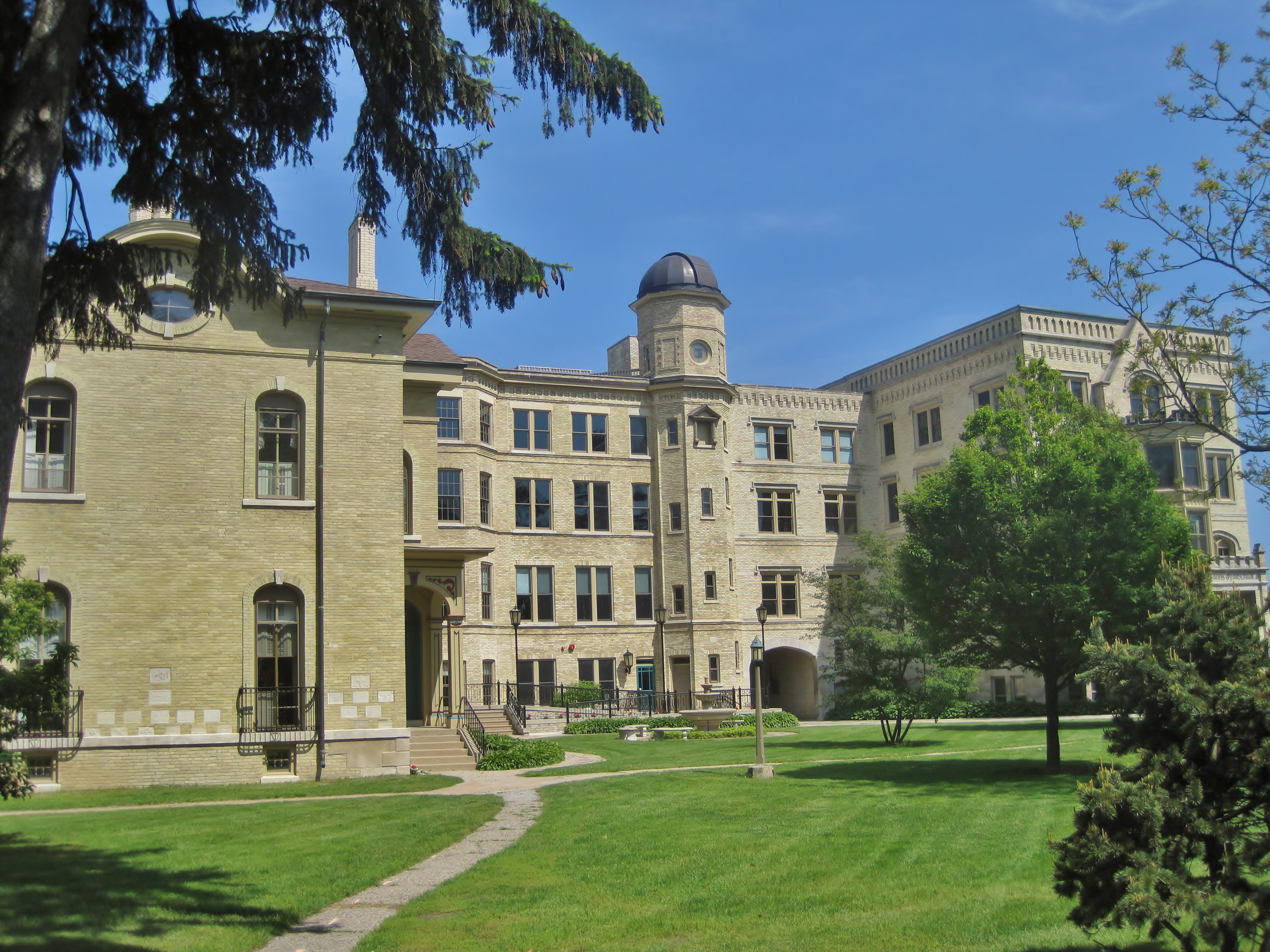
Kemper Center in Kenosha was built in 1861 as Senator Charles Durkee's home and later became an Episcopal boarding school for girls. On January 8, 1900, a nun from the school was found drowned in Lake Michigan, and her ghost, along with Sister Margaret Clare who died falling down the observatory staircase, are seen throughout the building and grounds.
On January 8, 1900, two children found a body washed up on the shore of Lake Michigan near Kenosha. It was a nun. Days earlier, she'd been working at Kemper Hall, the Episcopal boarding school for girls that sat on the bluff above the lake. She'd arrived in 1899, fresh from the seminary, supposedly on sabbatical for her mental health. Two young girls last saw her walking along the beach on January 2. She left behind her handbag and her crucifix.
Authorities received a false tip that she'd been seen in Springfield, Missouri. She hadn't. The most likely explanation is that she walked into the freezing water, her black robes dragging her under.
Kemper Center started life as the private home of Senator Charles Durkee, built in 1861 on the Lake Michigan shoreline. Durkee donated the property to St. Matthew's Episcopal Church, and by 1865 it was operating as Kemper Hall, a boarding school for girls run by the Sisters of St. Mary. The school closed in 1975, and the property became a public recreation center and event venue. It's on the National Register of Historic Places.
The drowned nun isn't the only death story tied to the building. Sister Margaret Clare, a stern figure who led the school starting in 1878, died in a fall on the spiraling observatory staircase. Whether she tripped on her robes or was pushed depends on who's telling the story. A teenage student, separated from her boyfriend after being sent to Kemper Hall, jumped from the roof. Neither incident has been verified through historical records, but multiple sources in Kenosha tell both stories.
The haunting reports go back decades. Cloaked, faceless figures have been spotted on the grounds, usually near the lake side of the property, and they disappear when anyone gets close. Inside, people hear footsteps in empty halls. A young girl's figure has been seen standing on the staircase.
The windows are a recurring detail. Staff and visitors have noticed shapes looking out from upper-floor windows in rooms that are empty. In 1997, fiction writer David Schmickel photographed the mansion and found images of what he described as something or someone staring back at him from the windows. The photographs were later archived in Salt Lake City.
Ghost tours run at Kemper Center regularly, and they stick to the nun stories for good reason. The drowning on January 8, 1900, is specific enough to research, vague enough to fill in, and sad enough to stick. The building helps. The Victorian architecture, the lakefront setting, the spiraling observatory tower where Sister Margaret Clare supposedly fell. There's a weight to the place that doesn't need embellishment.
Kenosha's Lakeshore Pedal Tours includes Kemper Center on their ghost tour route, and the center itself hosts a haunted house event each fall. For a building that spent over a century as a boarding school run by nuns, the transition to haunted attraction feels less like a stretch and more like an inevitability.