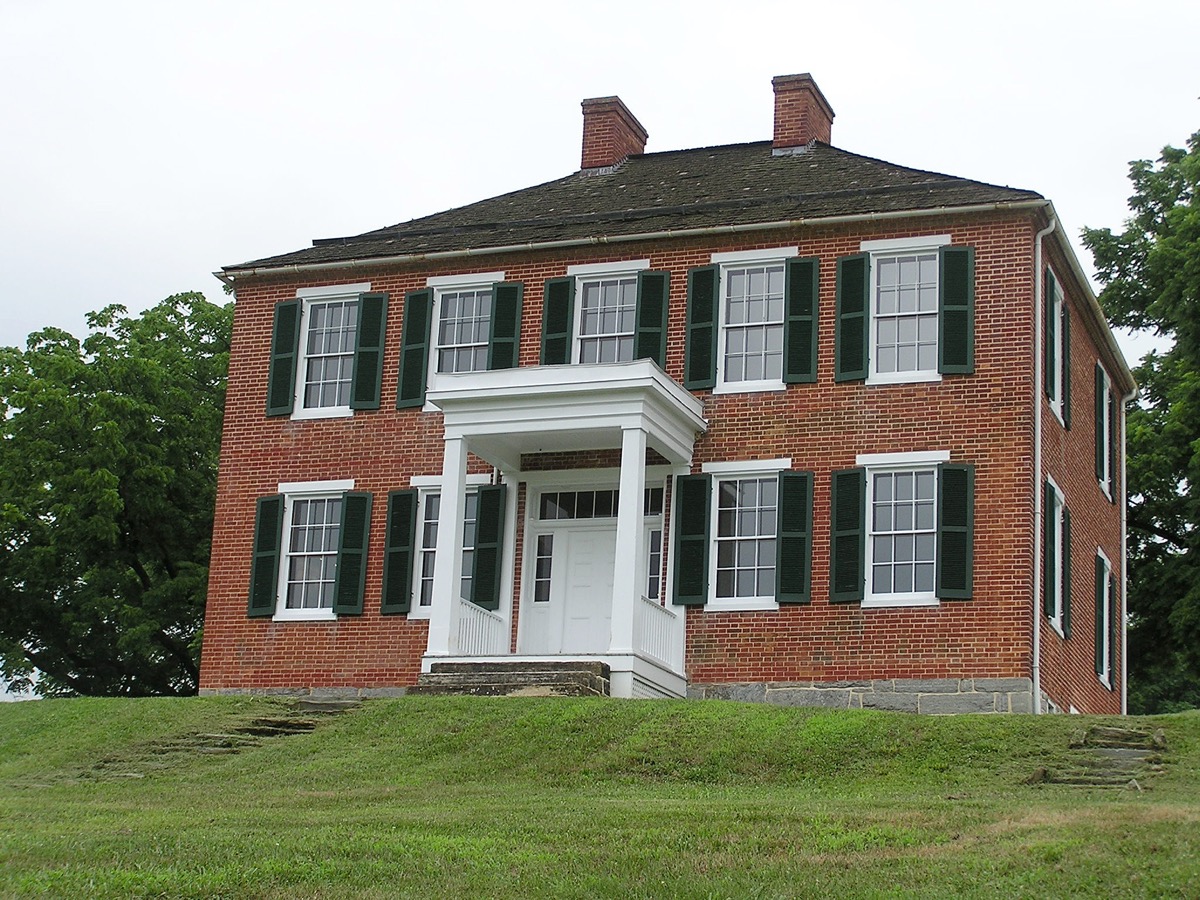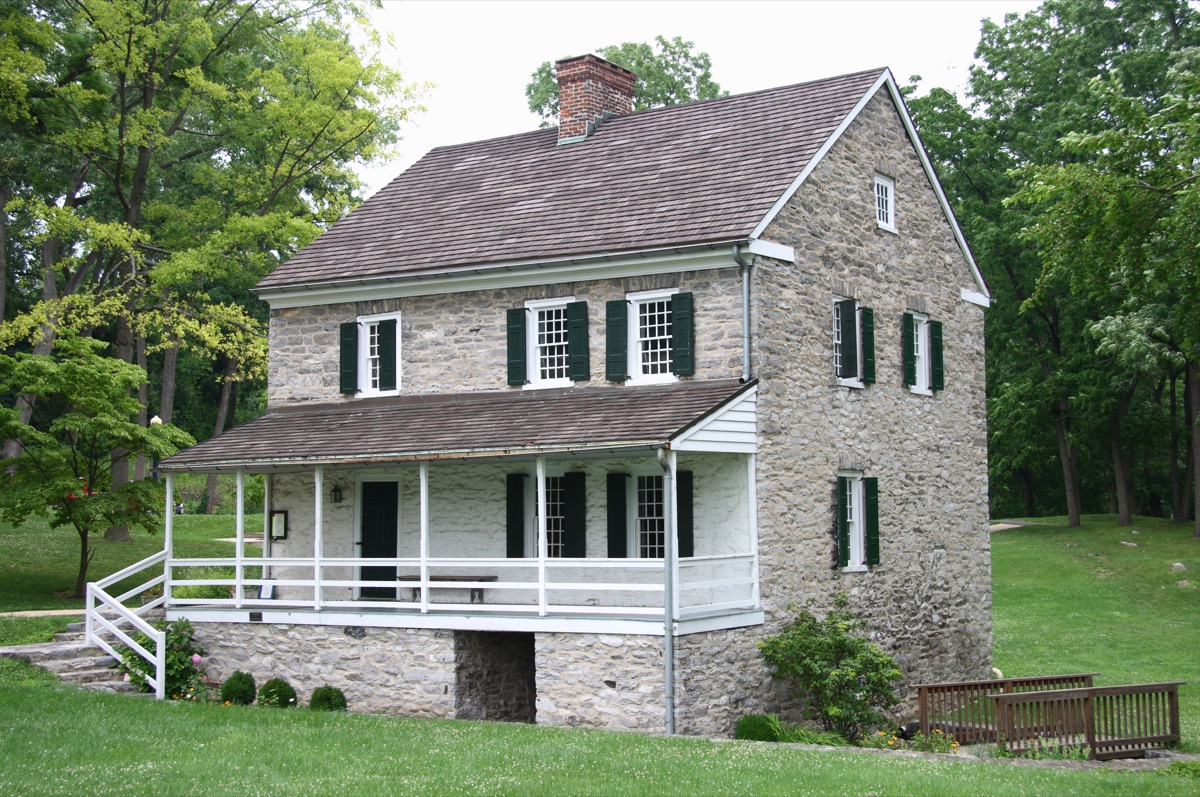
At the Jonathan Hager House in Hagerstown, Maryland, one room undoes visitors: the nursery. A cradle and a rocking chair move with no one near them, the cold comes and goes, and a woman fainted there on a ghost tour.
There's a room in the Jonathan Hager House in Hagerstown, Maryland that the staff will tell you breaks people. It's the nursery. Cross the threshold and visitors describe a wall of dread that lifts the moment they step back out. The cradle rocks with no one near it. The rocking chair does the same. One woman fainted there on a ghost tour.
The house was built around 1740 by Jonathan Hager, a German immigrant who founded the town and named it for his wife. He laid 22-inch limestone walls in the German tradition, directly over two springs that still run through the cellar at a constant 40 degrees, water supply and cold storage in one. Hager himself died in 1775, crushed by a falling roof beam while supervising work on a church he'd donated the land for. He never lived long enough to see the family the nursery belongs to.
That family came later. Michael Hammond bought the house in 1813, and the Hammonds are the reason the staff give for nearly everything that happens here. In 1844, four of the Hammonds' grown children died inside these walls within a single three-month stretch, with infants and in-laws lost in the years on either side of it, most likely to an epidemic that moved through the household and didn't stop.
By the house's own count, at least 13 people have died inside it across nearly 300 years. "Some died naturally," the lore goes, "some died by accident and some, perhaps, not by accident."
The rest of the house keeps its own company. A Woman in Green is seen at the windows, or as a flash of green dress in the hallways. A Man in Black smokes a pipe on the porch. Visitors have reported a man in 19th-century attire there, and a woman in Victorian dress in the upper hallway, along with phantom smells of perfume and tobacco where no one is standing. Down in the cellar, by the cold springs, people hear footsteps and the sound of heavy objects dragged across stone.
And a corn-cob doll moves between visits. The staff set it down in one place and find it in another, relocated, they say, by the children who never left. A little girl is said to latch onto the women who come through, following them room to room.
The city runs lantern-lit tours each fall, and they sell out. Parks and Rec is careful about what it claims. "We cannot say or confirm that it is actually haunted," a supervisor said, framing the tours as entertainment only. People still cross back over the nursery threshold the first chance they get, just to breathe.