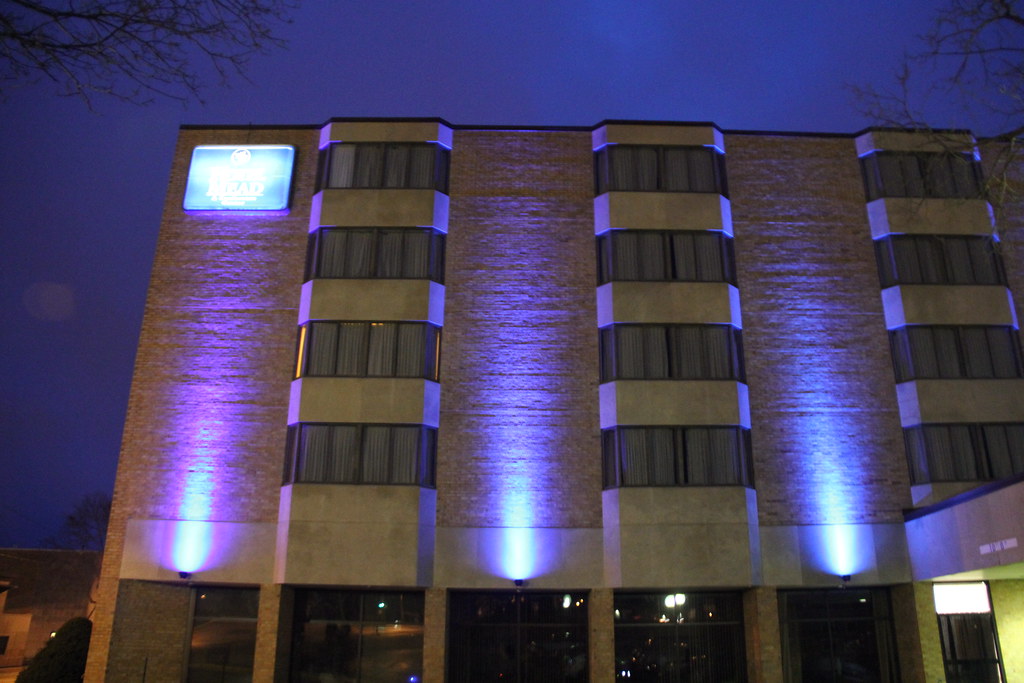
Hotel Mead in Wisconsin Rapids was built in 1951 and named after paper company president George W. Mead I. The Shanghai Room in the basement, where a bartender was allegedly stabbed to death in the 1950s or 1960s, produces reports of flickering lights, self-closing doors, and the smell of blood, though a paranormal investigation debunked several of the claims.
Rose worked the overnight laundry shift at Hotel Mead, 11 p.m. to 7 a.m. More than once, she heard people talking and glasses clinking from the storage area near the old bar. Every time she went to check, the sounds stopped. No one was there. The glasses weren't even set up anymore.
Hotel Mead opened in 1951 in Wisconsin Rapids as a replacement for the 69-year-old Witter Hotel. Consolidated Water Power and Paper Co. built it, originally calling it the Bel-mead Hotel, meaning "beautiful valley." When company president George W. Mead I suffered a stroke and stepped down that same year, they renamed it in his honor. A Daily Tribune article from the era called it "one of the most modern and attractive hotels in the middle west, if not the entire nation." The hotel hosted Duke Ellington, Jacqueline Kennedy, and Richard Nixon over the years. It became the Mead Inn in 1962, then switched back to Hotel Mead in 1999.
The ghost story centers on the Shanghai Room in the basement. According to local legend, a female bartender was stabbed to death down there sometime in the 1950s. Other accounts push the date into the 1960s. The murder has never been confirmed through official records, which makes it one of those stories that survives entirely on word of mouth and the fact that something about that basement room makes people uncomfortable.
A separate legend names a saloon dancer called Mary who bled to death somewhere in the building, though the details on this one are even thinner.
What actually gets reported: a smell described as blood that hits you within about 20 feet of the old Shanghai Room. Lights flicker. Doors close on their own. The temperature drops sharply in a space that's already underground and cool to begin with.
Dennis, a guest in 2016, noticed doors in the basement hallways moving on their own, drifting further down the hall. Malis, visiting in 2017, walked into a room where the lights started flickering immediately, the temperature felt wrong, and the feeling of being watched was strong enough to notice. Multiple employees over the years have told similar stories about the basement level, particularly about sounds from the bar area after closing.
The River Cities Paranormal Society investigated the Shanghai Room and found explanations for several of the reported effects. High EMF readings in the basement could cause feelings of dread and unease. Nearby cleaning chemicals accounted for the blood smell. The underground location explained the cold. They found no evidence of a haunting.
Their conclusions haven't slowed down the stories. Staff who've worked the overnight shifts have their own opinions, and Rose hearing phantom cocktails being poured in a room that hasn't served drinks in decades isn't something an EMF reading explains away. The hotel, now over 70 years old and a fixture in Wisconsin Rapids, draws its fair share of guests who specifically request the lower-level rooms. Whether they sleep well is another question.