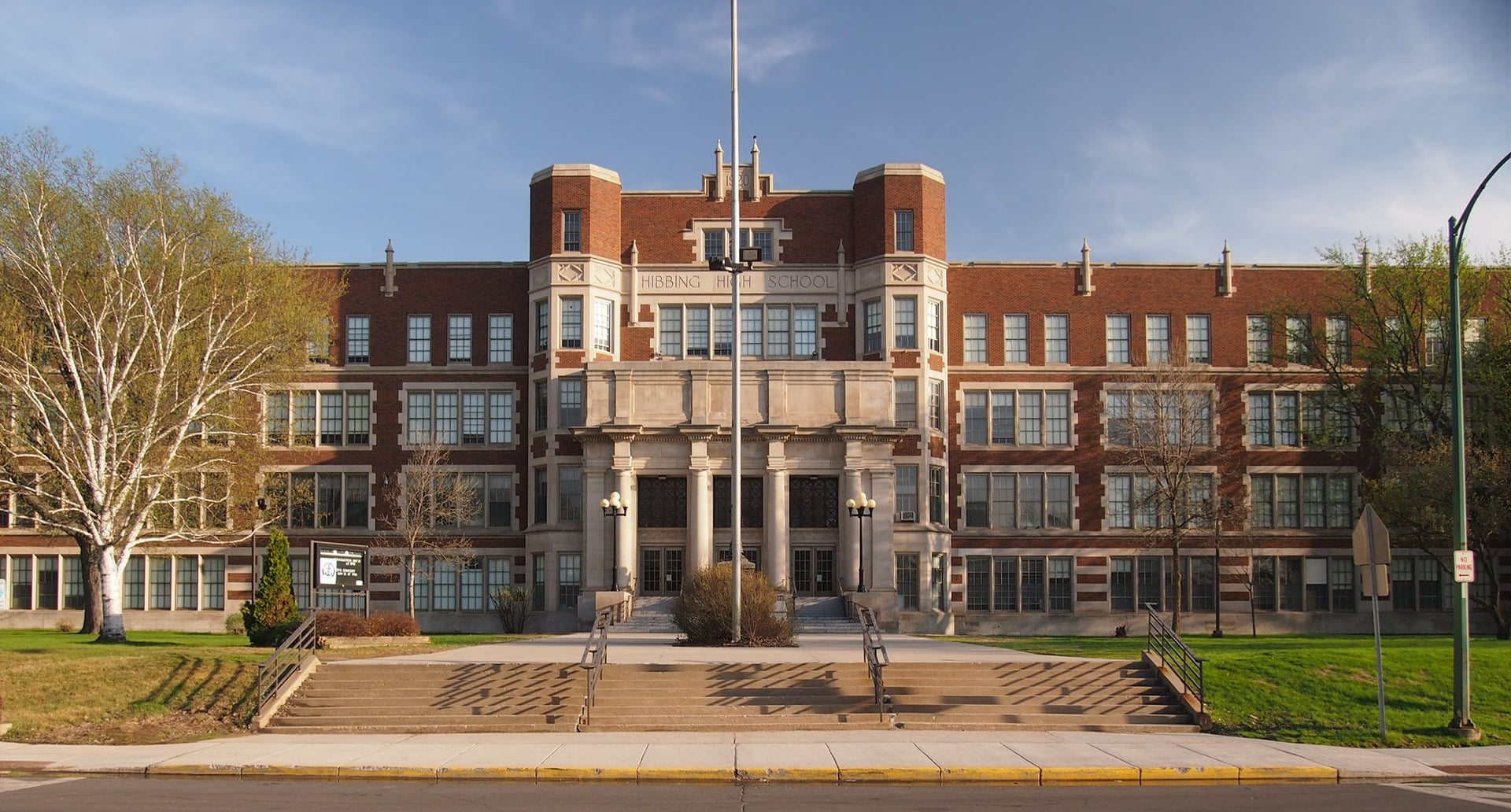
The auditorium at Hibbing High School in Minnesota is an 1,800-seat opera house, and the town says a dead stage manager still sits in one of its chairs. Photograph seat J-47, the story goes, and a translucent man in a hat turns up in it.
The auditorium at Hibbing High School in Minnesota has one seat nobody wants — J-47, in the center section. The story is that a man still sits in it. Photograph the empty chair, locals tell it, and a translucent figure in a hat and coat turns up in the frame, sitting where no one was.
They say he's Bill. William Ratican, the auditorium's stage manager, who favored J-47 and, by the legend, never gave it up after he died. Students, the retellings go, won't sit in the chair or walk past it. The looser versions of the story have a stage light or a chandelier falling on his head while he sat there. Records tell a quieter one: Ratican was a Minnesota native, a lawyer by day, and he died in April 1967, with no falling fixture in any account anyone has traced.
The room he supposedly haunts is worth the haunting. The school was built on iron-mining money in the early 1920s, after the Oliver Iron Mining Company physically moved the town of Hibbing to dig out the ore beneath it. The locals call it the "Castle in the Wilderness." The mining wealth paid for an auditorium modeled on a New York opera house: roughly 1,800 seats, cut-glass chandeliers said to be sheathed in Czech crystal, a molded-plaster ceiling, a 1,900-pipe organ. Bob Dylan played a talent show on that stage as a teenager, until the principal pulled the curtain on his loud Little Richard number.
The photographs are where the story gets slippery. In one account, students caught the apparition in the early 1970s. In the better-sourced one, stage manager Chuck Perry began shooting Polaroids of J-47 in 1979 after a visiting psychic remarked on the energy there. Six frames came back with anomalies. "The problem was you could see through him, so they took another picture, and the guy was still there," says longtime tour guide Bob Kearney.
Then comes the part the town leaves out. Years later, the principal and Perry said the famous photos were staged. Kearney himself, by that account, had posed as the ghost in old clothes from the auditorium's costume room, to play up the building's reputation and scare the students.
And yet the tours still run. Kearney walks visitors through the auditorium, points out the chair in the center section, and tells the story of the man in J-47 the way it has always been told. The most famous proof of the ghost was a custodian in a borrowed coat. The town tells it as the real thing anyway.