TLDR
The Cassadaga Hotel sits in America's only spiritualist town and openly markets its ghosts. Room 22 smells like cigars and gin.
The Full Story
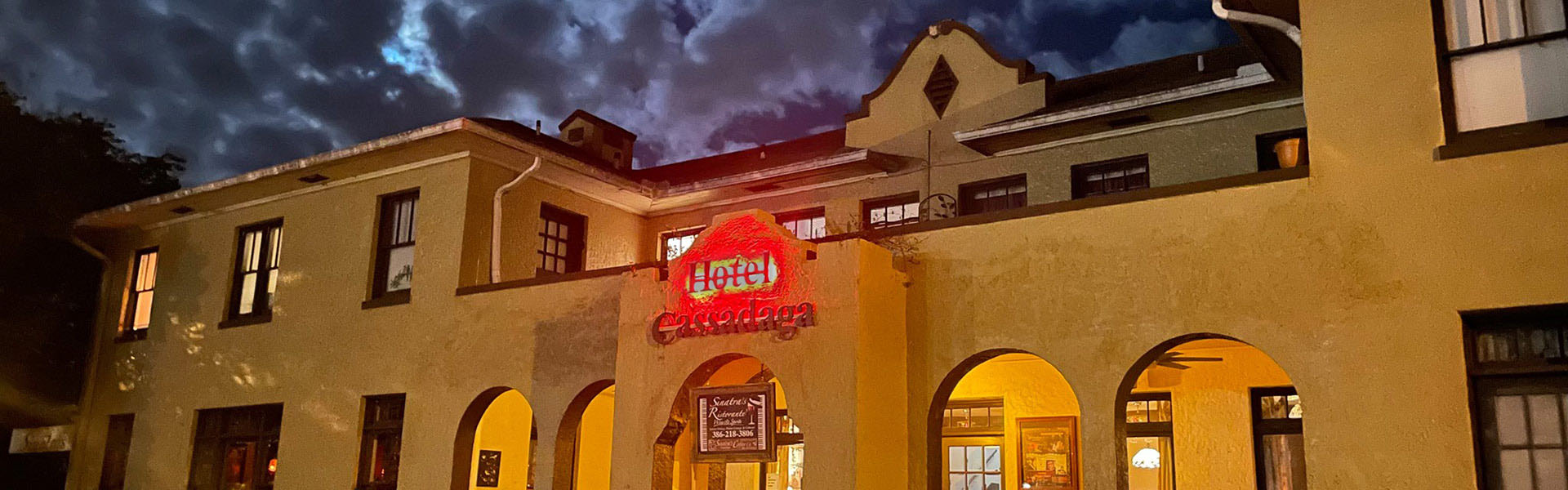
The Cassadaga Hotel doesn't hide its ghosts. It sells them. Seances, tarot, past-life regression, "Encounter the Spirits" orb tours, all booked on the official website, all happening inside a two-story Mission Revival building in the only town in America incorporated as a spiritualist camp. Most haunted hotels treat the reputation like a rumor they'd rather not confirm. Cassadaga puts it on the homepage: "home to many friendly spirits."
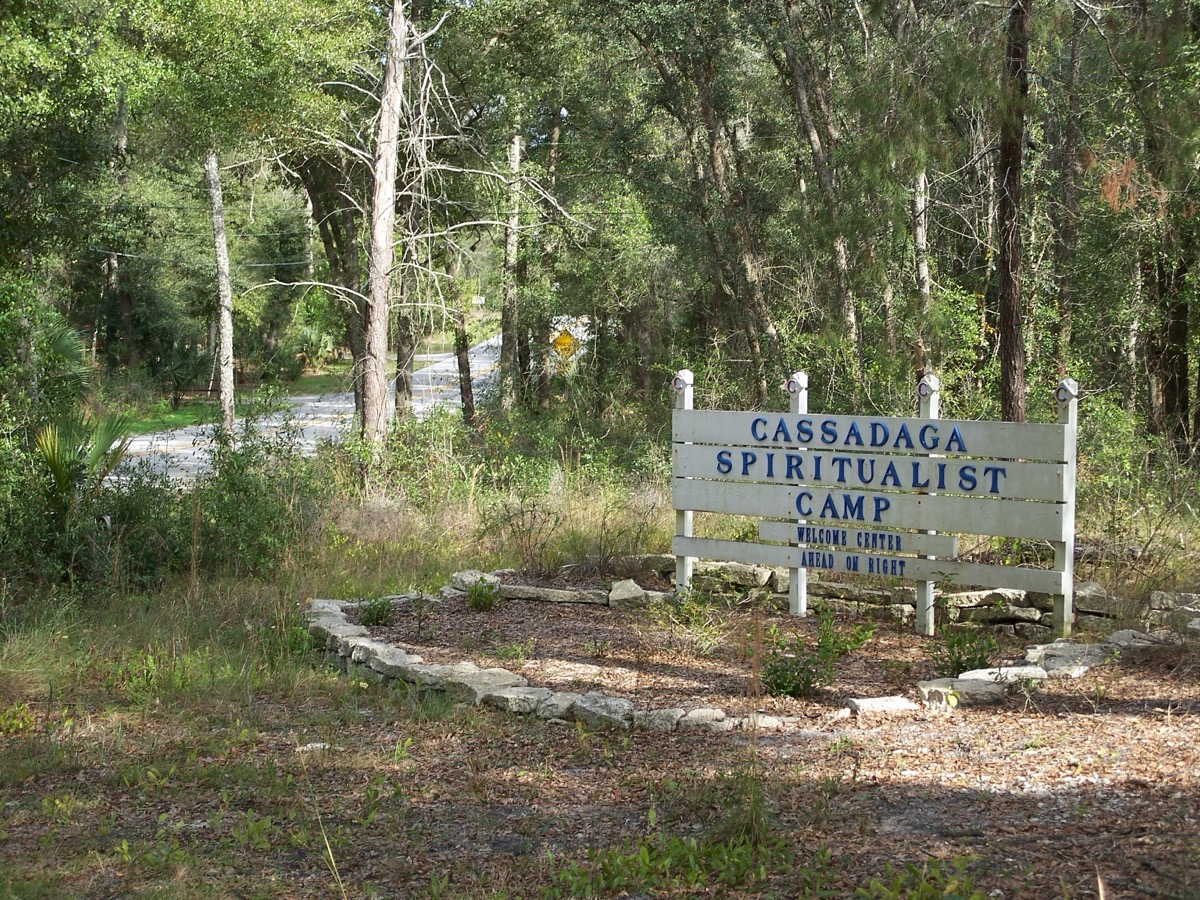
The town earns the framing. Cassadaga was founded around 1875 by George P. Colby, a trance medium from Pike, New York, as the southern outpost of the upstate spiritualist tradition. The Southern Cassadaga Spiritualist Camp Historic District went on the National Register on March 14, 1991, 240 acres and 65 contributing buildings. The hotel sits in the middle of it at 355 Cassadaga Road, about 40 miles from Orlando and 20 from Daytona, which means most guests stumble in from a beach trip and leave somewhere stranger than where they started.
There was an earlier hotel, wood-frame, and it burned. According to the architect's own archive, faulty wiring took it down on December 26, 1926, a $50,000 loss. (Flamingo Magazine puts the fire on Christmas Eve 1925, but the architect record is the stronger source, so we're going with 1926.) The camp directors wanted a building that wouldn't repeat the trick. In May 1927 they hired William J. Carpenter, AIA, an Atlanta architect and a published authority on fireproof construction. Construction started mid-1927. The new hotel opened to guests on November 28, 1928. Two-story masonry, stucco exterior, central shaped parapet, cross-hip roof, rusticated cast-block foundation. It's been there ever since.
The Morn family bought it in 1979 and renovated the inside while leaving the exterior alone. Diana Morn has owned the place since. She told Flamingo Magazine, "It's certainly not the Hyatt Regency, but if I changed things, the spirits wouldn't like it." One sentence captures the operating principle of the whole hotel. Don't upgrade. Don't sand off the weirdness. The Queen Anne furniture in the lobby, the halls "lined with myriad mirrors," the French doors and double-hung sash windows, the central west-side veranda, none of it modernized. Morn says she saw her first ghost on her first night in the building, a slightly transparent man near the lobby staircase. Single secondary source on that detail, so take it as the owner's account, not gospel.
The named spirits are mostly tied to the rebuild and the camp around it. Arthur is the most famous. Lore says he was an Irish tenor who lived in (and died in) Room 22 sometime in the 1930s. No obituary turned up to confirm the death, which is worth flagging, but the room itself has a reputation that doesn't depend on his paperwork. Room 22 is on the second floor at the end of the hallway. Guests report the smell of cigars, gin, and body odor. There's a chair at the hallway window where, in the lore, Arthur liked to sit and watch outside. He flickers lights. He passes through guests as a cold chill. Sometimes he shows up as a shadow at the foot of the bed.
Then there's Gentleman Jack, described as a cigar-smoking ladies' man. Two young girls, Sarah and Kaitlin, who, per ghost-tour sources, "frolic up and down the halls." A Lady in White appears in the top-floor windows. Backstories for any of them: blank. No death dates, no historical events, no documented identities. Just character sketches that have circulated through ghost-tourism writeups for years. The official hotel "About" page acknowledges spirits in the abstract but doesn't name them. The names come from secondary sources, which is fair to know.
What's unusual here isn't a single ghost story. It's the hotel's relationship to the whole genre. Most haunted hotels run a two-track operation: the ghost mention in the marketing, the manager who shrugs and says "people see things sometimes." Cassadaga doesn't bother. The website says guests have photographed "spirit energies in and around the hotel." The booking page lists psychic readings, tarot, astrology, numerology, reiki, energy healing, past-life regression, and seances as line items. The architect built a fireproof box in 1927 because the camp wanted permanence. The current owner refuses to renovate because the spirits "wouldn't like it." Both moves are the same move, just a few decades apart: protect the place from change.
There's no formal investigation report from a named paranormal team on file for the hotel, no EVP recordings from a Ghost Adventures crew or anything similar. The phenomena come from guests, ghost-tour operators, and travel writers, not investigators with equipment. If you want a properly documented haunting with logs and timestamps, this isn't it. If you want a working hotel that treats its dead as residents, with cigar smoke under the door of Room 22 and a chair facing the right window, the whole pitch is right there.
Researched from 6 verified sources. How we research.