A 1.9-million-square-foot former tire factory in Eau Claire where a man was fatally electrocuted in Building 13 while growing marijuana in the electrical infrastructure. The phantom hum of his nonexistent AC unit, screams, and shadowy figures of former factory workers haunt the complex and its massive underground tunnel system.
Somewhere inside Building 13 at Banbury Place, an air conditioning unit hums. The unit was removed years ago. According to paranormal researcher Chad Lewis, who studied psychology at UW-Stout, the sound traces back to a man who was growing marijuana inside the building's electrical infrastructure and got fatally electrocuted while trying to hook up an AC unit for temperature control. His body went undiscovered for days. "When they did find his body it was turned to mush and was a puddle of skin and bones," Lewis recounts.
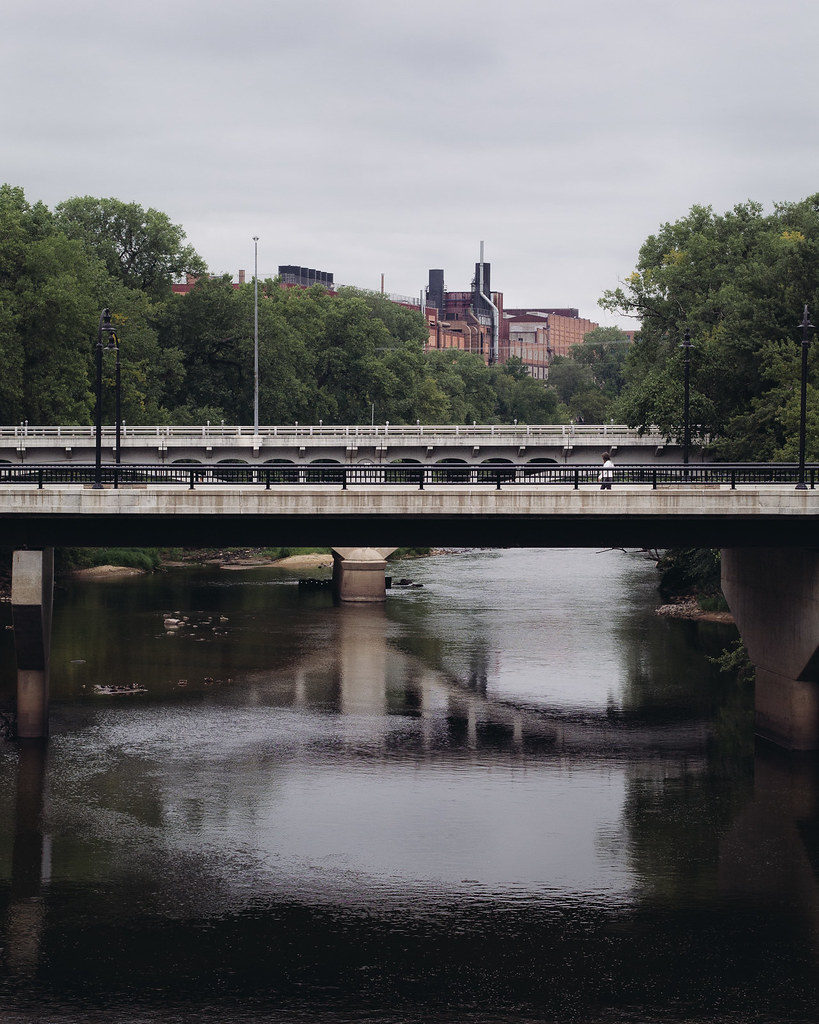
The building where this happened is part of a 1.9-million-square-foot former tire factory along the Eau Claire River. The Gillette Safety Tire Company opened the plant on May 23, 1917 with 250 workers producing 200 tires a day. By the 1920s, 1,600 employees were turning out 19,000 tires and 14,000 inner tubes daily. After Pearl Harbor, the U.S. government converted the facility into the Eau Claire Ordnance Plant for small arms munitions. At peak wartime capacity, more than 6,200 workers staffed the buildings, 61 percent of them women. The plant earned the Army-Navy E Award for production excellence in 1943.
After the war, U.S. Rubber bought the property back for $1,025,000 and resumed making tires. The factory passed through Uniroyal, B.F. Goodrich, and finally Michelin before closing permanently on June 26, 1992, putting 1,358 people out of work. Union leader Darrel Wekkin put it bluntly: "It was a way of life for Eau Claire for a lot of years, and it was coming to an end."
Developers Bill Cigan and Jack Kaiser bought the complex in August 1992 and renamed it Banbury Place. Today it houses 155 businesses and around 500 to 600 employees. But beneath their feet runs a massive underground tunnel system stretching from building two to building ten on one side and from 3X to 11 on the Galloway Street side. Kaiser explains that the tunnels originally carried processed steam lines and electrical systems for vulcanizing rubber. The passages still contain ladders, stairs, abandoned machinery, and a century of accumulated industrial dust.
The tunnels are where things get strange. The Chippewa Valley Museum's director has noted that people report a creepy feeling down there, and employees have seen dark shapes moving through the underground passages. Maureen Forster, a Banbury Place employee, told the UW-Eau Claire Spectator that "people have claimed to see things, dating way back into the underground tunnels, when Banbury used to be a tire company." Ghostly figures that look like former factory workers drift through the hallways above ground, too.
Building 13 remains the hotspot. Beyond the phantom AC unit, screams and painful moans echo through the space, sounding like someone reliving the electrocution. Sherry Strub documented the haunting in her book Wisconsin's Ghosts. Forster noted that while no verified evidence confirms the electrocution was fatal, the stories persist stubbornly among staff. When the Spectator contacted Banbury Place management for comment, they refused to respond.
Thousands of people worked in these buildings across 75 years of grinding industrial labor, wartime munitions production, and the stress of eventual closure. The January 8, 1991 closure announcement devastated the city so deeply that suicides and divorces were attributed to the mass layoff. Banbury Place now hosts apartments, art studios, fitness centers, and the Uniroyal Tire Factory Gallery, but the old factory's workforce, living and otherwise, doesn't seem to punch out.